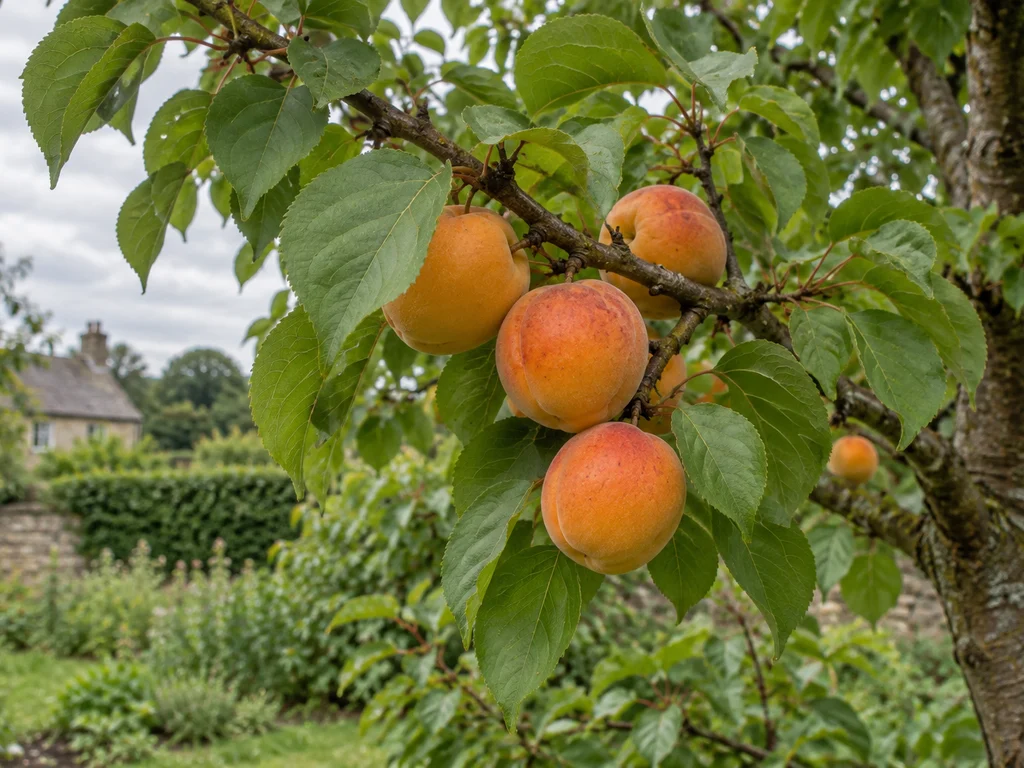
AI-generated illustration — check edibility and toxicity notes, never eat from the picture alone.
Apricot
Prunus armeniaca
A warm, sheltered, sunny wall is essential in the UK. Protect the early blossom from frost and hand-pollinate with a soft brush.
Prunus armeniaca is the most commonly cultivated apricot species. The native range is somewhat uncertain due to its extensive prehistoric cultivation. Genetic studies indicate Central Asia is the center of origin. It is extensively cultivated in many countries and has escaped into the wild in many places. The specific epithet armeniaca refers to the country of Armenia.
Description from Wikipedia (CC BY-SA).
At a glance
- Sunlight
- Full sun
- Water need
- Medium
- Mature height
- 4 m
- Maintenance
- Medium
- Hardiness
- USDA 5–9
- Layers
- canopy, understory
Functional roles
Pollination & soil
Self-fertile, but very early flowers may need hand-pollination in cold springs.
- Soil
- light/sandy, medium/loam
- pH
- Neutral, Alkaline
Free-draining, even gritty soil; hates winter wet.
Propagation
How to make more of this plant for free — the permaculture way.
When: Graft late winter
Flowers early, so needs a sheltered, frost-free spot (a warm wall) in the UK.
Where to get it
Read more
Seed data pending expert review. Identification photo and description are sourced from Wikipedia/Wikimedia; always confirm a plant in person before eating any part of it.