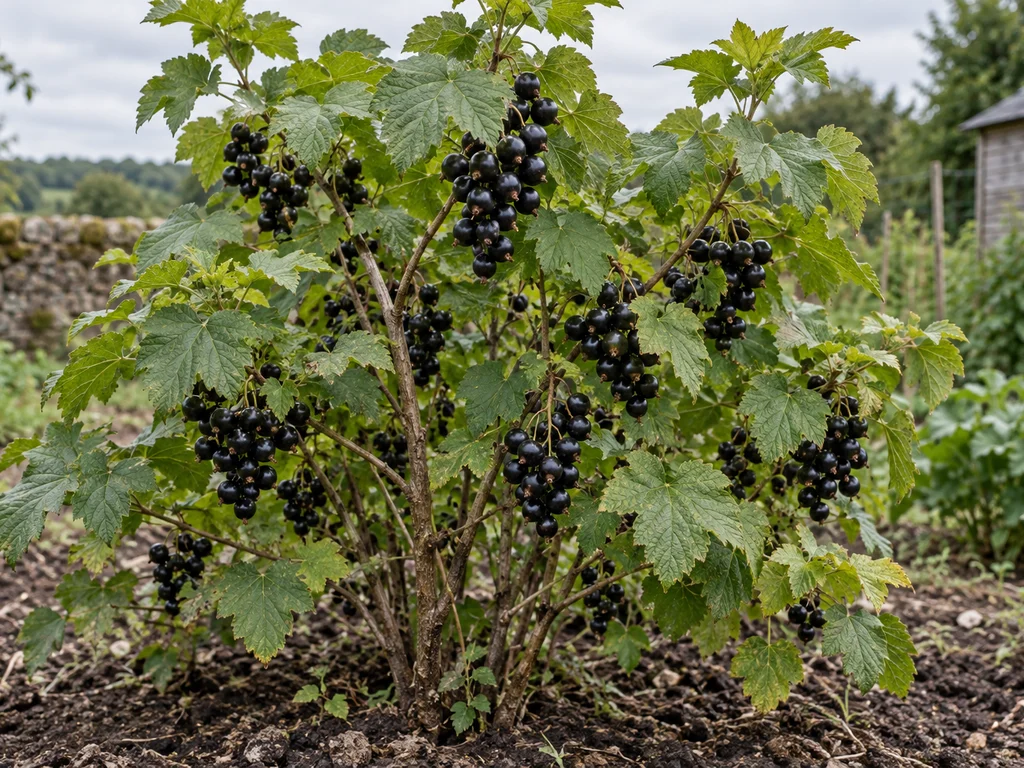
AI-generated illustration — check edibility and toxicity notes, never eat from the picture alone.
Blackcurrant
Ribes nigrum
Fruits on last year's wood, so each winter cut out about a third of the oldest stems to the base to keep new growth coming.
The blackcurrant, black currant or cassis is a deciduous shrub in the family Grossulariaceae grown for its edible berries. It is native to temperate parts of central and northern Europe and northern Asia, where it prefers damp fertile soils. It is widely cultivated both commercially and domestically.
Description from Wikipedia (CC BY-SA).
At a glance
- Sunlight
- Partial shade
- Water need
- Medium
- Mature height
- 1.5 m
- Maintenance
- Medium
- Hardiness
- USDA 3–8
- Layers
- shrub
Functional roles
Pollination & soil
- Soil
- medium/loam, heavy/clay
- pH
- Neutral
Rich, moisture-retentive soil; the hungriest of the currants.
Propagation
How to make more of this plant for free — the permaculture way.
When: Hardwood cuttings autumn
One of the easiest of all — cuttings root readily.
Cultivars
Buy the cultivar, not just the species. “Ready” means its size and pollination are sourced; anything else needs confirming with the supplier first.
- Ben ConnanReady
Compact and early, with unusually large berries and good mildew resistance. Plant 5 cm deeper than it sat in the pot and cut it hard back the first winter.
- Uses
- eating, preserve
- Mature spread
- 1.4–1.5 m
- Pollination
- self-fertile
Pollination: Royal Horticultural Society
Where to get it
Read more
Seed data pending expert review. Identification photo and description are sourced from Wikipedia/Wikimedia; always confirm a plant in person before eating any part of it.