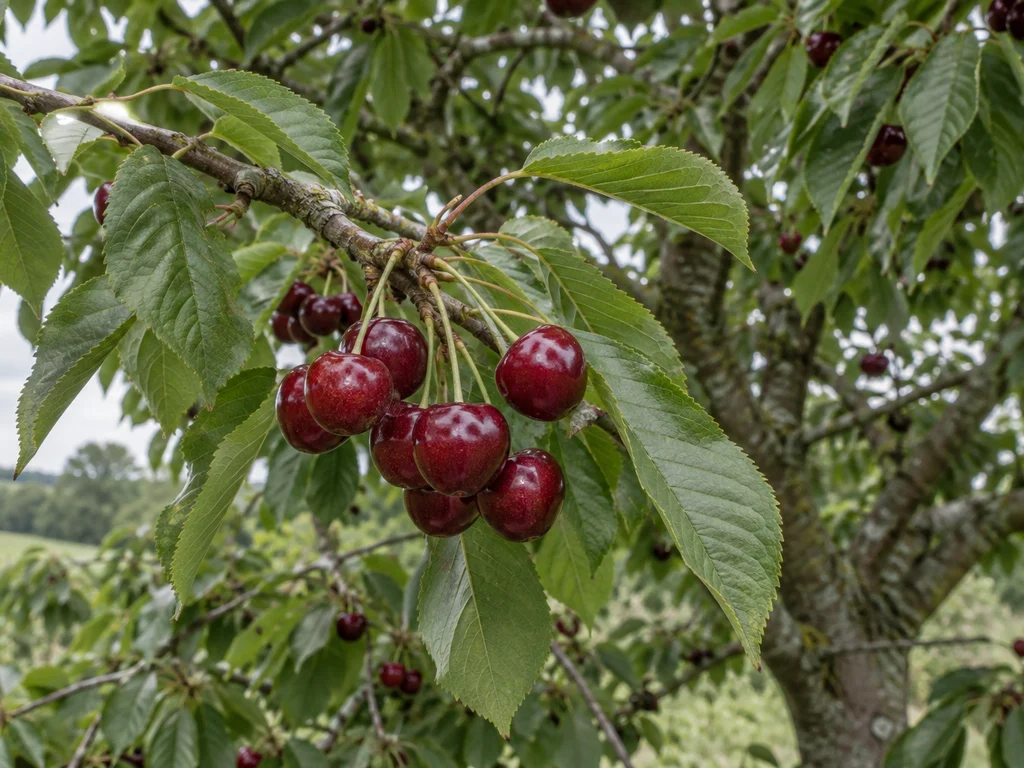
AI-generated illustration — check edibility and toxicity notes, never eat from the picture alone.
Cherry
Prunus avium
Choose a dwarfing rootstock (Gisela 5) to keep it nettable, or you'll share the whole crop with the birds.
Prunus avium, commonly called wild cherry, sweet cherry or gean, is a species of cherry, a flowering plant in the rose family, Rosaceae. It is native to western Eurasia and naturalized elsewhere. It is an ancestor of P. cerasus.
Description from Wikipedia (CC BY-SA).
At a glance
- Sunlight
- Full sun
- Water need
- Medium
- Mature height
- 6 m
- Maintenance
- Medium
- Hardiness
- USDA 4–8
- Layers
- canopy
Functional roles
Pollination & soil
Sweet cherries often need a compatible partner; modern types like Stella are self-fertile.
- Soil
- medium/loam
- pH
- Neutral
Needs free-draining, fertile soil; dislikes wet feet.
Propagation
How to make more of this plant for free — the permaculture way.
When: Graft late winter
Cultivars
Buy the cultivar, not just the species. “Ready” means its size and pollination are sourced; anything else needs confirming with the supplier first.
- StellaConditional
Self-fertile and a useful pollen donor for other sweet cherries. Net it or the birds will have the lot.
- Uses
- eating
- Mature spread
- Not yet checked
- Pollination
- self-fertile
Pollination: Royal Horticultural Society, Keepers Nursery
- no sourced footprint: neither its own habit nor a compatible rootstock gives usable dimensions.
Birds compete heavily for fruit; net or share.
Where to get it
Read more
Seed data pending expert review. Identification photo and description are sourced from Wikipedia/Wikimedia; always confirm a plant in person before eating any part of it.