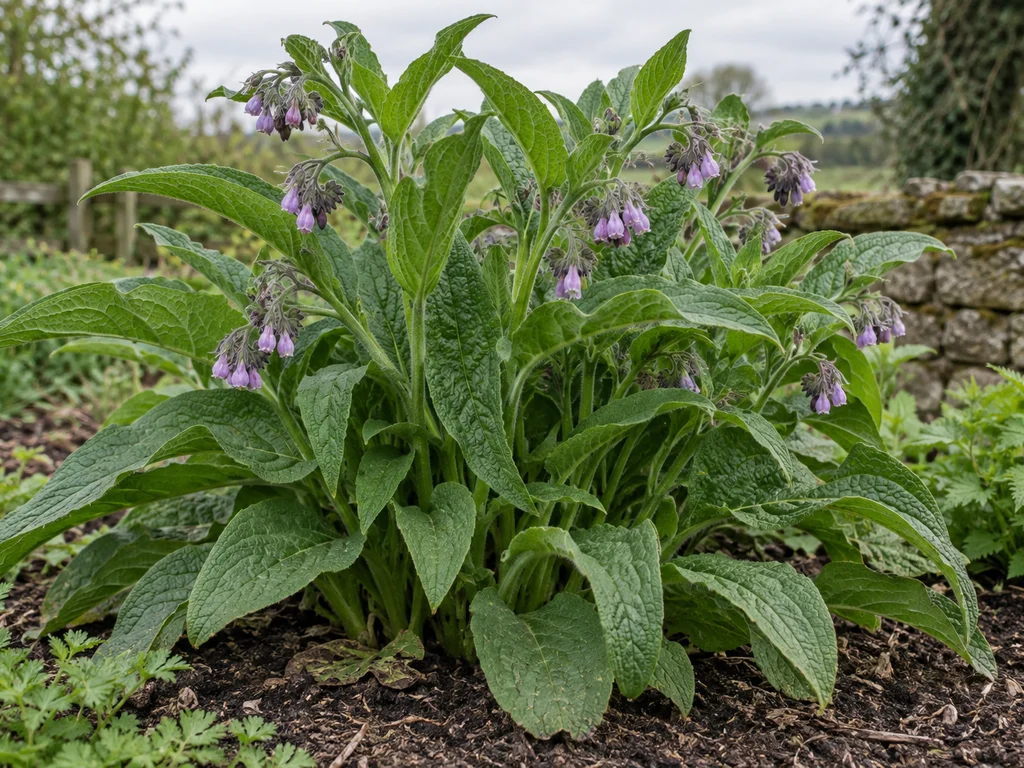
AI-generated illustration — check edibility and toxicity notes, never eat from the picture alone.
Comfrey (Bocking 14)
Symphytum × uplandicum
The classic fertility plant: cut it three or four times a year for mulch around fruit trees or to steep into a (smelly but excellent) liquid feed.
Russian comfrey or Quaker comfrey is a common hybrid between Symphytum officinale and S. asperum. It represents the economically most important kind of comfrey.
Description from Wikipedia (CC BY-SA).
⚠ Safety
Contains pyrrolizidine alkaloids; not recommended for eating. Use as mulch / feed.
At a glance
- Sunlight
- Partial shade
- Water need
- Medium
- Mature height
- 1 m
- Maintenance
- Low
- Hardiness
- USDA 3–9
- Layers
- herb
Functional roles
Pollination & soil
- Soil
- light/sandy, medium/loam, heavy/clay
- pH
- Acid, Neutral, Alkaline
Grows almost anywhere; deeper, richer soil gives more bulk.
Propagation
How to make more of this plant for free — the permaculture way.
When: Root cuttings / divide spring or autumn
Bocking 14 is sterile, so it spreads only where you plant it.
Companions & conflicts
- ✓Apple — Classic chop-and-drop partner for fruit trees.
Deep taproot mines nutrients; cut several times a year for mulch or liquid feed.
Where to get it
Read more
Seed data pending expert review. Identification photo and description are sourced from Wikipedia/Wikimedia; always confirm a plant in person before eating any part of it.