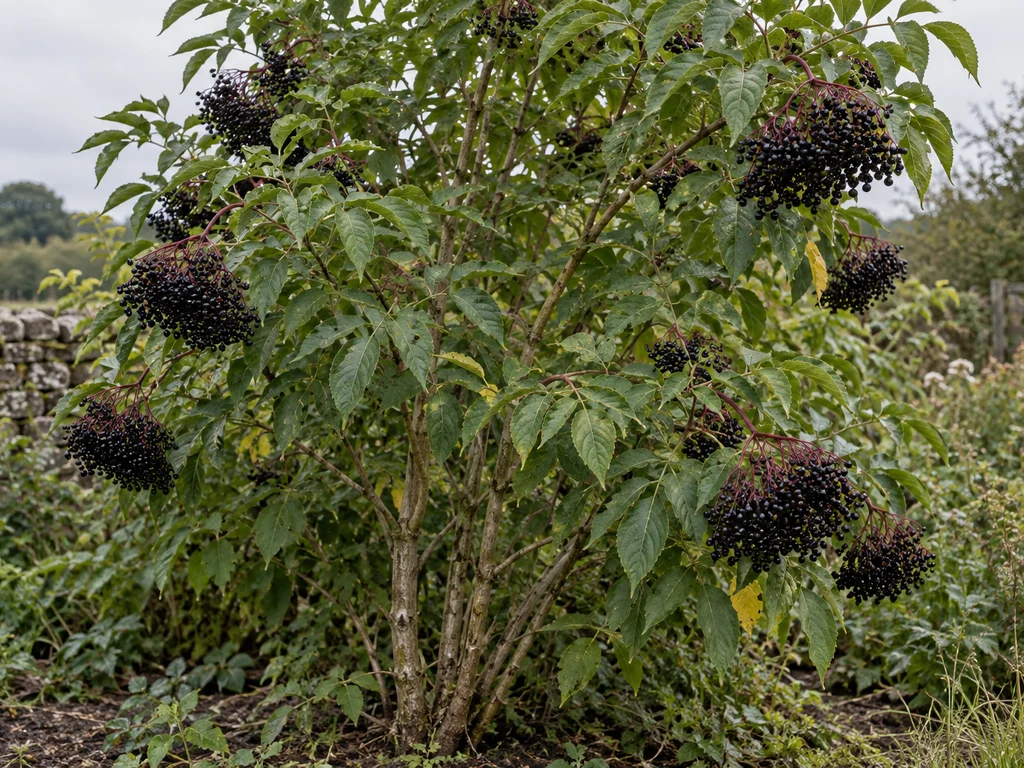
AI-generated illustration — check edibility and toxicity notes, never eat from the picture alone.
Elder
Sambucus nigra
Fast, forgiving and doubly useful: flowers for cordial in early summer, berries for syrup in autumn. Coppice hard if it gets leggy.
Sambucus nigra is a species complex of flowering plants in the family Viburnaceae native to most of Europe. Common names include elder, elderberry, black elder, European elder, European elderberry, and European black elderberry. It grows in a variety of conditions including both wet and dry fertile soils, primarily in sunny locations. The plant is widely grown as an ornamental shrub or small tree.
Description from Wikipedia (CC BY-SA).
⚠ Safety
Raw berries and flowers are mildly toxic; cook before eating. Leaves, bark and stems are toxic.
At a glance
- Sunlight
- Partial shade
- Water need
- Medium
- Mature height
- 4 m
- Maintenance
- Low
- Hardiness
- USDA 4–8
- Layers
- shrub
Functional roles
Pollination & soil
- Soil
- medium/loam, heavy/clay
- pH
- Neutral
Loves rich, even disturbed, nitrogen-rich ground.
Propagation
How to make more of this plant for free — the permaculture way.
When: Hardwood cuttings autumn/winter
Where to get it
Read more
Seed data pending expert review. Identification photo and description are sourced from Wikipedia/Wikimedia; always confirm a plant in person before eating any part of it.