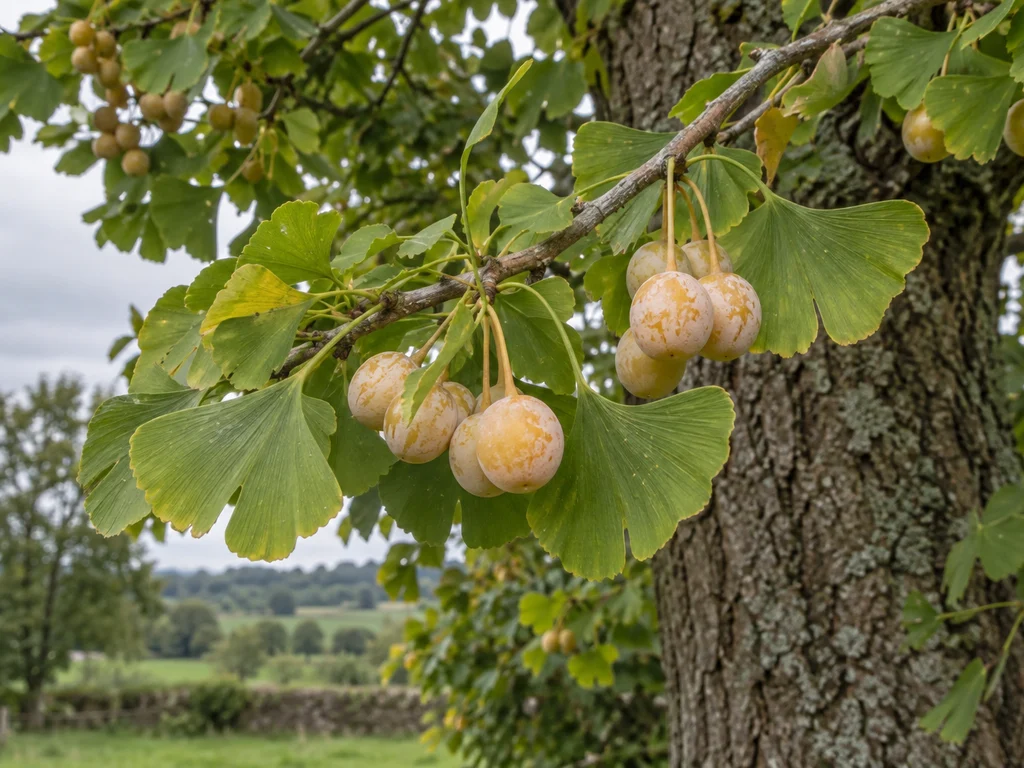
AI-generated illustration — check edibility and toxicity notes, never eat from the picture alone.
Ginkgo (Maidenhair Tree)
Ginkgo biloba
Ginkgo biloba, commonly known as ginkgo, also known as the maidenhair tree, and often misspelled "gingko" is a species of gymnosperm tree native to East Asia. It is the last living species in the order Ginkgoales, which first appeared over 290 million years ago. Fossils similar to the living species, belonging to the genus Ginkgo, extend back to the Middle Jurassic epoch about 170 million years ago. The tree was cultivated early in human history, remains commonly planted, and is widely regarded as a living fossil.
Description from Wikipedia (CC BY-SA).
⚠ Safety
Only the inner seed is eaten, cooked and in small amounts; the fleshy seed-coat is an irritant and large quantities of seeds are toxic.
At a glance
- Sunlight
- Full sun
- Water need
- Low
- Mature height
- 15 m
- Maintenance
- Low
- Hardiness
- USDA 4–9
- Layers
- canopy
Functional roles
Propagation
How to make more of this plant for free — the permaculture way.
When: Sow seed autumn
Ancient, pollution-proof tree; female trees bear the edible 'ginkgo nuts'. Plant named female grafts.
Where to get it
Read more
Seed data pending expert review. Identification photo and description are sourced from Wikipedia/Wikimedia; always confirm a plant in person before eating any part of it.