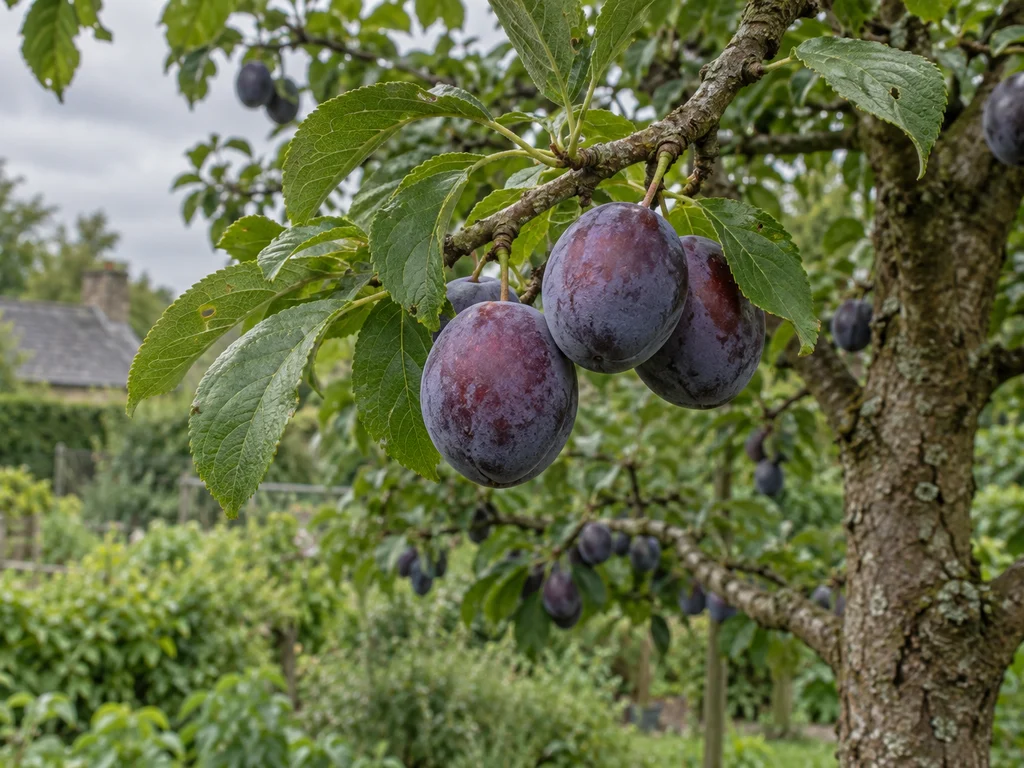
AI-generated illustration — check edibility and toxicity notes, never eat from the picture alone.
Plum
Prunus domestica
Crops young and heavily. Prune only in summer to avoid silver leaf, and thin the fruit in a glut year so branches don't break.
Prunus domestica is a species of flowering plant in the family Rosaceae. A deciduous tree, it includes many varieties of the fruit trees known as plums in English, though not all plums belong to this species. The greengages and damsons also belong to subspecies of P. domestica.
Description from Wikipedia (CC BY-SA).
At a glance
- Sunlight
- Full sun
- Water need
- Medium
- Mature height
- 4 m
- Maintenance
- Medium
- Hardiness
- USDA 4–8
- Layers
- canopy, understory
Functional roles
Pollination & soil
Varies by variety; some (e.g. Victoria) are self-fertile, many need a partner.
- Soil
- medium/loam, heavy/clay
- pH
- Neutral
Fine on heavier soils; likes moisture but not waterlogging.
Propagation
How to make more of this plant for free — the permaculture way.
When: Graft late winter; lift suckers when dormant
Cultivars
Buy the cultivar, not just the species. “Ready” means its size and pollination are sourced; anything else needs confirming with the supplier first.
- VictoriaConditional
Self-fertile, so one tree crops. Thin the fruit in a heavy year or the branches break, and prune only in summer to avoid silver leaf.
- Uses
- dual, preserve
- Mature spread
- Not yet checked
- Pollination
- self-fertile
Pollination: Keepers Nursery, NIAB
- no sourced footprint: neither its own habit nor a compatible rootstock gives usable dimensions.
Prune in summer to avoid silver leaf.
Where to get it
Read more
Seed data pending expert review. Identification photo and description are sourced from Wikipedia/Wikimedia; always confirm a plant in person before eating any part of it.