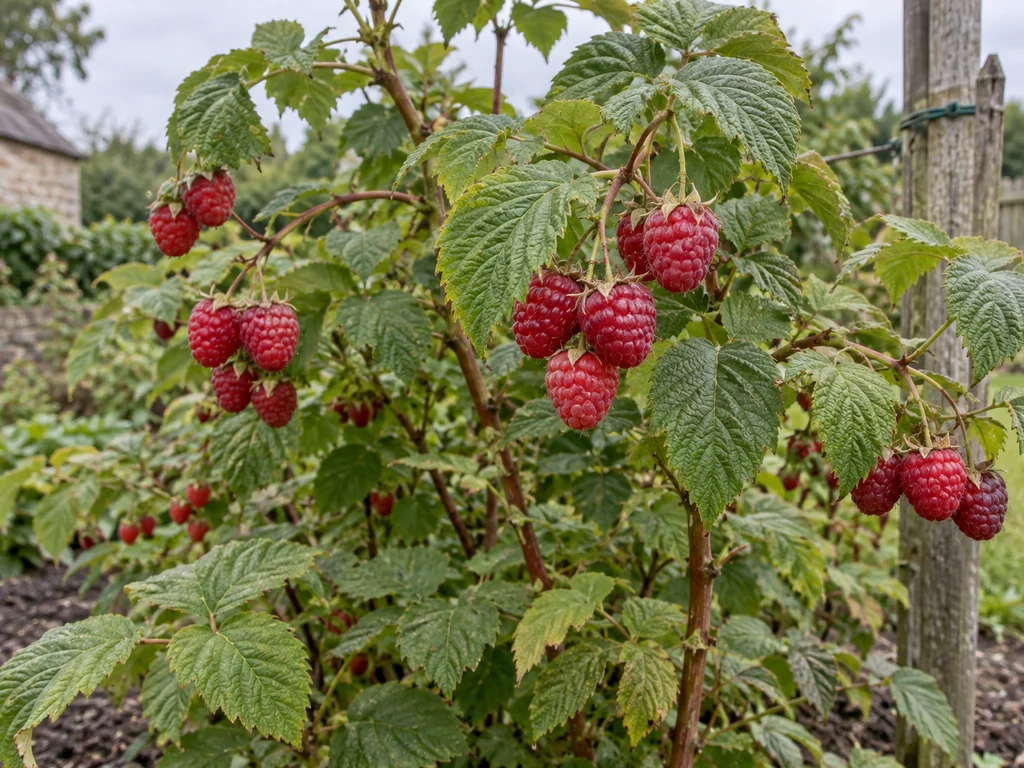
AI-generated illustration — check edibility and toxicity notes, never eat from the picture alone.
Raspberry
Rubus idaeus
Decide summer- or autumn-fruiting, as they're pruned differently. Autumn types are simplest: just cut everything to the ground in winter.
Rubus idaeus is a red-fruited species of Rubus native to Eurasia and commonly cultivated in other temperate regions.
Description from Wikipedia (CC BY-SA).
At a glance
- Sunlight
- Partial shade
- Water need
- Medium
- Mature height
- 1.8 m
- Maintenance
- Medium
- Hardiness
- USDA 3–8
- Layers
- shrub
Functional roles
Pollination & soil
- Soil
- medium/loam
- pH
- Acid, Neutral
Moist but free-draining; dislikes lime and waterlogging.
Propagation
How to make more of this plant for free — the permaculture way.
When: Lift suckers autumn/winter
Cultivars
Buy the cultivar, not just the species. “Ready” means its size and pollination are sourced; anything else needs confirming with the supplier first.
- Glen AmpleReady
Summer-fruiting, so it crops on last year's canes: cut the fruited brown canes out after picking and tie in the new green ones. Nearly spine-free.
- Uses
- eating, preserve
- Mature spread
- 0.4–0.5 m
- Pollination
- self-fertile
Pollination: Royal Horticultural Society
- Autumn BlissReady
Autumn-fruiting on this year's canes, which makes it the easiest fruit in the garden to prune: cut everything to the ground in February. Short, sturdy canes often stand without support.
- Uses
- eating, preserve
- Mature spread
- 0.4–0.5 m
- Pollination
- self-fertile
Pollination: Royal Horticultural Society
Needs support; suckers spread.
Where to get it
Read more
Seed data pending expert review. Identification photo and description are sourced from Wikipedia/Wikimedia; always confirm a plant in person before eating any part of it.