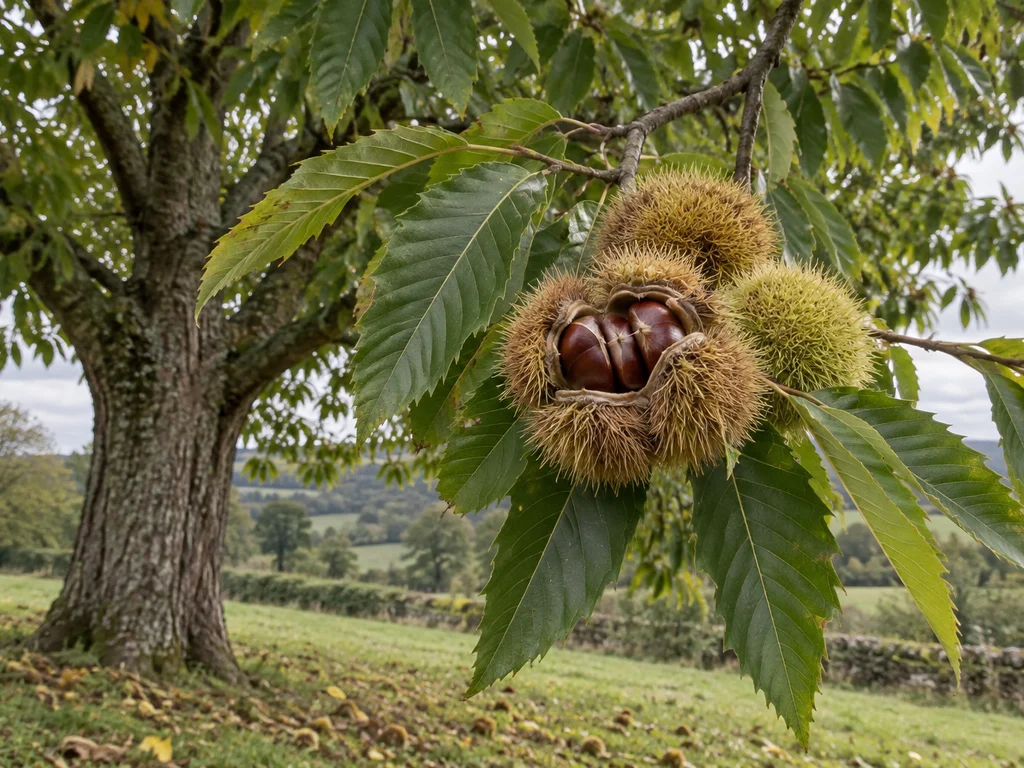
AI-generated illustration — check edibility and toxicity notes, never eat from the picture alone.
Sweet Chestnut
Castanea sativa
A big tree and a superb coppice crop (durable poles that need no treatment). Plant two for nuts, and only on acid ground.
The sweet chestnut, also known as the Spanish chestnut or European chestnut, is a species of tree in the family Fagaceae, native to Southern Europe and Anatolia, and widely cultivated in Western and Central Europe. A substantial, long-lived deciduous tree, it produces an edible seed, the chestnut, which has been used in cooking since ancient times.
Description from Wikipedia (CC BY-SA).
At a glance
- Sunlight
- Full sun
- Water need
- Low
- Mature height
- 20 m
- Maintenance
- Low
- Hardiness
- USDA 5–8
- Layers
- canopy
Functional roles
Pollination & soil
Needs a second compatible seedling/variety to set good nuts.
- Soil
- light/sandy, medium/loam
- pH
- Acid
Must have acid, free-draining soil; will not tolerate chalk.
Propagation
How to make more of this plant for free — the permaculture way.
When: Sow fresh nuts autumn; graft named varieties
Big tree needing space and acidic soil; also a classic coppice crop.
Where to get it
Read more
Seed data pending expert review. Identification photo and description are sourced from Wikipedia/Wikimedia; always confirm a plant in person before eating any part of it.